
TOTAL INVESTMENT IN SDC HITS RM107bn IN FIRST QUARTER

Wednesday, April 25, 2012

Datuk Seri Musa Aman

The total cumulative committed investment in the Sabah Development Corridor (SDC) has reached RM107 billion as at the end of the first quarter of this year.

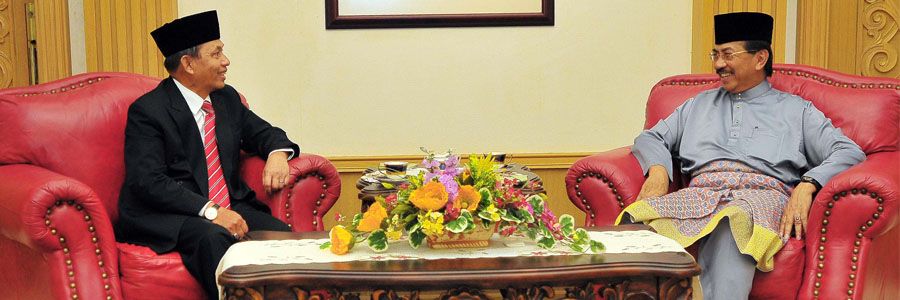
Chief Minister Datuk Seri Musa Haji Aman (pictured left) said this reflects the private sector confidence in the state’s economy following the alignment of SDC and other projects with national-level plans.

He added that the implementation of SDC and the establishment of the Sabah Economic Development and Investment Authority (SEDIA) had facilitated and enhanced a closer working relationship between the state and federal governments.


And, Musa recalled that during the launch of the SDC Open Day two months ago, Prime Minister Datuk Seri Najib Tun Razak had made special reference to and applauded this working relationship.

He also said the SDC projects had benefited everyone in Sabah, regardless of their location, socio-economic status and ethnic background, in line with the pledge that no one would be left behind.

“As chairman of SEDIA, I assure you that all outstanding SDC projects will be carried out and we will implement new projects including the identified entry point project (EPPs),” he said in his opening remarks at the Ninth Meeting of Members of the Authority at Wisma SEDIA near here yesterday.

Musa who is also Finance Minister, was represented by one of his deputies, Tan Sri Joseph Pairin Kitingan at the meeting.

The Chief Minister also announced that the SEDIA, a one-stop authority to drive the SDC, has endorsed the governance structure for EPPs.

In this respect, a Steering and Delivery Management Office had been established under SEDIA for this purpose.

He also said the structure, which is integrated into SEDIA’s existing investment processing and monitoring mechanism, will make SEDIA, the one-stop authority, to plan, attract, process, facilitate and monitor investments into the SDC.

“New investments identified as EPPs may be submitted through this mechanism. I believe this will enable SEDIA to help the nation expedite the implementation of the Economic Transformation Programme (ETP),” he said.

Musa also said the lab for Sabah placed emphasis on aligning the ETP, Government Transformation Programme (GTP) and Tenth Malaysia Plan with the SDC and local development plans.

“This process for SDC and Greater Kota Kinabalu identified 31 Entry Point Projects (EPPs) with a target investment of RM77.5 billion by the year 2020,” he said.

And, according to him, these EPPs are expected to generate RM35.5 billion in incremental Gross National Income (GNI), and create about 144,000 new jobs.

Musa also said the implementation of these EPPs is estimated to be able to drive Sabah’s economic growth at an annual average of nine per cent.

He said SEDIA would accord greater emphasis on measures to encourage investors to partner or enter into joint ventures with Government-Linked Companies (GLCs) and SDC implementing agencies, as well as to team up with local entrepreneurs.

Driven by 12 National Key Economic Areas (NKEAs), there are a total of 131 EPPs outlined within specific sectors to grow the national economy and these EPPs are expected to lead Malaysia towards achieving a high-income nation status by 2020.

Within that time frame, Sabah is expected to have a per capita income of about RM32,400 which represents 72 per cent of the national target and achieve a GNI of RM110 billion.

Plantation sector urged to adopt automation extensively

Datuk Seri Musa Aman

Chief Minister Datuk Seri Musa Haji Aman has urged the plantation industry to adopt automation extensively in their operations.

He said mechanisation would cut the need for labour by up to 40 per cent and hence increase production and quality.

Opening the Kapilit Palm Oil Mill near Brumas here yesterday, he said, effective agronomy such as the process fertilization and consistent monitoring would contribute towards achieving the national production target of 4.5 metric tonnes to six metric tonnes per hectare. The mill is owned by Sabah Softwoods Berhad (SSB), a subsidiary company of Yayasan Sabah.

"The east coast has great potential to become Sabah’s ‘growth area’ in the development of oil palm due to its fertile land".
“This will enable the oil palm industry to remain strong and yield huge revenue,” he said.

Musa, who is also Finance Minister, said the state government has always stressed on the aspect of increasing production and quality of agricultural products.

“This is in line with the state’s development agenda which is to develop the agriculture sector,” he said.

The east coast, Musa said, has great potential to become Sabah’s ‘growth area’ in the development of oil palm due to its fertile land.

Also present yesterday were the Chief Minister’s wife, Datin Seri Hajah Faridah Haji Tussin, Assistant Finance Minister, Datuk Tawfiq Datuk Abu Bakar Titingan, SSB chairman, Datuk Wilfred Bumburing, Yayasan Sabah director, Tan Sri Datu Khalil Datu Jamalul and wife, Balung Assemblyman, Datuk Syed Abbas Syed Ali, Sebatik Assemblyman, Muis Picho and SSB’s CEO, Mohd Hatta Jaafar.

At the event yesterday, SSB and Universiti Teknologi Mara Malaysia (UiTM) signed a memorandum of understanding (MoU) for a commercial planting project and use of Laucaena Leucocephala.

Musa wants to see State agencies becoming high achievers

Datuk Seri Musa Aman

Chief Minister Datuk Seri Musa Aman says he wants to see state investment agencies emerging high achievers in their investments and economic activities.

He said becoming high achievers in their ventures are not something impossible if the agencies showed high commitment, sincerity and efficient administration.

"If the agencies practised efficient management, with the employees working with high commitment, the agencies will surely succeed in their endeavours," said Musa, who is also State Finance Minister, at the Sabah Softwoods Bhd's annual dinner here on Sunday night.

Citing Sabah Softwoods as an example, Musa said the Sabah Foundation's subsidiary has developed, raking in profits totalling hundreds of millions of ringgit a year though in the formative years the company could only manage a few million ringgit profit.

"When a company makes profit, the spillovers are not only enjoyed by the State Government via annual dividend payments by the company to the Government, the employees can also reap the benefits," said Musa, who is also Sabah Foundation Board of Trustees Chairman.

The Chief Minister said the company's financial means to offer four months' bonus for its employees recently was proof of its good performance, which would benefit its employees and the organisation as a whole.

"The company's affordability to pay back the RM25 million loan in advance to Innoprise Sdn Bhd (a subsidiary of Sabah Foundation) gives satisfaction to everybody.

"So, it's not wrong to give four months' bonus to the employees as such rewards are also practised by multinationals," he said.

Musa also suggested to government investment agencies, particularly companies which have invested in oil palm estates, to diversify their products by venturing into oil palm downstream industries and not merely focusing on crude palm oil.

He said Sabah Softwoods was on the right track in its continued efforts to provide added value for its products and manufacture high quality goods and for its initiative to collaborate with other companies to make bigger profits in future.

Musa also cautioned the company to be careful when investing or teaming up with any company to ensure the investment or collaboration yielded the desired revenue.

RM48.99 million for implementation of 330 projects

The Ministry of Housing & Local Government has approved a substantial allocation of RM48.99 million for the implementation of 330 projects by all local authorities in Sabah until April this year.

Its Deputy Minister Datuk Seri Lajim Ukin said the amount is expected to help local authorities to resolve the existing problem of roads, ditches and drains in their respective area.

Datuk Seri Lajim Ukin

“The ministry through the Department of Local Government is committed to provide funding in its efforts to create local authorities that are dynamic and competitive,” he said at the presentation of the 2012 Annual Grants & Contribution in lieu of Rates to the local authorities on Sunday night.

“The ministry is prepared to provide additional allocations to local authorities in the State subject to the availability of funds and the performance of local authorities in implementing projects that had been approved,” he told reporters.

At the event, Lajim handed over a total of RM63.31 million in Annual Grants and Assistance Rates Contribution to the 24 local authorities throughout Sabah.

The amount comprised 2012 annual grants amounting to RM34.56 million and payment of contributions amounting to RM28.75 million.

Lajim who is also the Member of Parliament for Beaufort hoped that the grants and contributions will be used to assist the local authorities in providing good services to the people.

He also reminded local authorities to submit their annual audit reports on the implementation of projects undertaken during the year because the ministry will increase the allocation based on the commitment of respective local authority in the State.

“Based on the commitment given by the ministry in distributing allocations, I hope that all local authorities can ensure that the projects implemented are monitored from time to time,” he said.

“Each local authority should apply the element of monitoring as one of the local authorities’ commitment to ensure that all projects are implemented in line with the ‘Value for Money’ concept,” said Lajim.

According to him, the monitoring process needs to be done starting from the planning stage through to the completion of a project with special focus on the activities and areas of work involved.

“I am confident that by increasing monitoring frequency, the delay in the project will be addressed and this effort will hasten the project for the benefits of the people,” he remarked.

Datuk Hajiji Mohd Noor

Meanwhile, Local Government & Housing Minister Datuk Hajiji Mohd Noor said the annual grants given to local authorities in Sabah are for the third time since 2010.

“Distribution of this financial assistance will further enhance the respective local authorities’ efforts in the preparation and maintenance of public facilities, including, the cleanliness and beautification of area within the jurisdiction of respective local authority,” he said.

Also present were both Assistant Ministers of Local Government & Housing Datuk Edward Yong Oui Fah and Datuk Ghulam Haidar Khan Bahadar.

Sabah: Mega-projects support growth

The proposed model of Sabah Aeropod

The launch of an RM3bn ($984.15m) mixed-use development in Kota Kinabalu, the capital of Sabah, earlier this year is expected to provide a boost to the Malaysian state’s dynamic construction sector.

On February 25, SP Setia, a Malaysian property developer, inaugurated the Aeropod project, an integrated transportation centre also featuring residential, commercial and office space, after three years of studies. The venture will be completed in five phases over eight to 10 years and will span 28 ha when finished. It will host three hotels, 28,000 sq metres of retail space (including a shopping mall), office space, 5000 residential units, and the new headquarters of the Sabah Railway Department.

Aeropod was created in partnership with the Sabah government as part of a greater project to transform the Tanjung Aru railway station into a broader transportation centre. The first phase, to be finished in three years, will require RM235m ($77.09m) in investments and 11 ha of land. During this time, 28 units of shop lots – all of which have already been sold – will be built, along with the transport authority’s headquarters. This phase will also see the construction of Galeria, a visitor attraction that will feature an aquarium and a railway museum.

Another major project underway in Sabah is a high-value, upmarket resort set over a reef in the Celebes Sea. Set on more than 32.37 ha in Mabul Island, Alorie Lepa Resort will feature 88 pool villas. Construction for this venture, which required an investment of RM200m ($65.61m) from the Jewel of Mabul Development, a local hotel and resort developer, began in late 2011 and is expected to be finished by the first quarter of 2014.

These developments are expected to lure major investments to the Malaysian state. “The real estate sector in Sabah has experienced much growth in recent years, owing to investors’ confidence in the Sabah economy,” Musa Aman, the chief minister of Sabah, said. “We are seeing an upward trend in real estate value, not only in Kota Kinabalu, but also in other major towns like Sandakan, Tawau and Lahad Datu,” he said.

Commercial real estate is not the only area affected by the recent surge in construction. The energy sector is seeing several important projects as well, including plans to build a 300-MW power plant. The plant, backed by Tenaga Nasional, Malaysia’s largest electric utility company, is due for commissioning in 2015. The project is just one of many to benefit from the massive investments attracted by the palm oil industrial cluster (POIC). Since 2008, the POIC has drawn some RM4.5bn ($1.48bn) in investments and has facilitated the development of more than 600 ha of land and the construction of two sets of liquid-cargo jetties, a bulk jetty and industrial lots.

Major social projects are also in the pipeline. As part of Malaysia’s Rural Transformation Programme, 25 schools are scheduled to be built in the state. Unique to this project is the use of “green” construction techniques that utilise more fire- and wind-resistant materials. These techniques are part of the “industrialised building system”, a cost-effective method that would allow the schools to be completed in only two months.
Additionally, plans are in place to ensure that by the end of the year, Sabah will have 20 1Malaysia Clinics operating – the most for any state. At present, eight 1Malaysia Clinics are running, one was recently launched, one is in the construction phase and the location for the other 11 have been identified. They include Penampang, Beaufort, Sandakan, Kota Kinabalu and Keningau.

The high demand for construction projects is indeed a boon for the country, yet such growth does not come without challenges. One major concern, which particularly affects large construction projects employing many subcontractors, has to do with cash flow and adjudication. To address these issues, the government is in the process of passing legislation that would ensure payments for mega-construction projects are made in a timely fashion. The Construction Industry Payment and Adjudication Bill 2011 was approved on December 1, 2011 and is expected to be implemented at the end of this year.

With the surge in commercial real estate, the utilisation of cutting-edge, innovative techniques, and regulatory measures to safeguard investments, Sabah’s construction sector continues to demonstrate that it is ripe for investment.

Taken from Oxford Business Group

Sabah ranks third with resurgence in investment

Monday, April 9, 2012

Datuk Raymond Tan Shu Kiah
KOTA KINABALU: Sabah with a total investment of more than RM13 billion in 2011 is ranked third after Sarawak and Penang.
 
Industrial Development Minister Datuk Raymond Tan Shu Kiah said that according to the figures provided by Malaysian Investment Development Authority (MIDA), Sabah is not too far away from Sarawak which had recorded about RM14 billion in investment last year.

“The RM13 billion plus figure however has not taken into account the investment from the Oil and Gas industry meaning that the outlook for Sabah is very positive,” Raymond said in his speech when officiating at the Polytechnic Commercial Centre (PCC) which is located within KKIP here yesterday.

Speaking to reporters later, Raymond said that MIDA’s figures gave the state Government some indication as to how successful it is in terms of getting investments into Sabah.

PRODUCTION OF PLANTATION TIMBER HITS 1 MILLION M3

Wednesday, April 4, 2012


 For the first time in Sabah, production of plantation timber hit 1 million m3 in 2011 with a total production of 1,234,777.75 m3.  Total production from plantation timber increased by 141% since 2001, with Acacia mangium showing the most significant increase at 231%, making it the major plantation species being produced over the last 10 years. In 2011, Acacia mangium accounted for 87% of the total production of plantation timber, followed by Eucalyptus grandis at 11%, Gmelina arborea at 1% and others at 1%.    It is however noted that utilization of rubber wood remains small despite the extensive land clearing of old rubber plantations for replanting of new rubber trees.


Sabah Forest Industries Sdn Bhd produced 60% of last year’s production, making it the biggest producer of plantation timber in Sabah, followed by SAFODA at 16%, Sabah Softwoods Bhd at 12% and Benta Wawasan Sdn Bhd at 11%. In terms of production by land status, 58 % of plantation timber was produced from Forest Reserves, alienated lands at 26% and state lands at 16% respectively.

Forest plantations in Sabah are not really new with the first large scale forest plantations pioneered by Sabah Softwoods Bhd in 1974, followed by SAFODA and Sabah Forest Industries Sdn Bhd in the 1980s, and a great deal of research and development have been undertaken by the pioneers in all aspects of forest plantations such as tree breeding, silviculture and utilization of selected species of planted timber. The current utilization of plantation timber is widespread including sawn timber, veneer and plywood, pulp and paper and chips.  Sawn timber, namely Acacia mangium, is further value-added into garden furniture.

Acacia Mangium
Two companies namely Hijauan Bengkoka Sdn Bhd (15,360 ha) and Sabah Softwoods Bhd ( 27,313 ha) have obtained the well managed plantation certification from the Forest Stewardship Council (FSC), while Sabah Forest industries Sdn Bhd has also been partly certified by FSC under its controlled wood program.
Forest Stewardship Council
It is envisaged that production of plantation timber will continue to increase in the future with continuous reinvestment in forest plantations by key players including new players namely Sustainable Forest Management License Holders (SFMLA).

In contrast, log production from natural forests was approximately 2.6 million m3, still higher than that of plantation timber. It is envisaged that, if the current trend continues, the State’s goal of making plantation timber the major source of raw materials for the timber industry will be achieved.

For perspective, plantation timber for commercial purposes started being produced in 1982, with the maiden 22,996.60 m3 of Albizia falcataria. We have come a long way since then.

Musa Aman: The Best Chief Minister?

An excerpt from the articles 'Retelling the Sabah Story', written by Selvaraja Somiah (http://selvarajasomiah.wordpress.com)

Datuk Seri Musa Aman

SABAH, once almost synonymous with despondency, has been rising from the ashes of gloom and murkiness. The nearly infamous GDP growth rate of 8 per cent that was termed a miracle more than once is not just where the story begins or ends. The dreadful past that saw this North Borneo state decelerating, deteriorating and degrading is hard to picture vis-à-vis the present Sabah.

Sabah Chief Minister Musa Aman is increasingly seen as a reformer and renovator with sturdy administrative abilities. Today, the streets of Sabah resemble grace, as opposed to the crumbling hanging bridges and dilapidated highways and streets with no street lights a decade ago. An overwhelming thousands of kilometers of roads, more than hundreds of bridges, and a number of power plants including 12 IPP’s were constructed during Musa Aman’s tenure, including the Kimanis 1.5-Billion-Ringgit gas-fired plant the biggest IPP plant in Sabah – designed for 300MW – to address the power supply issue in the state is in its final stage of construction.

Read More: http://selvarajasomiah.wordpress.com/2012/04/03/retelling-the-sabah-story/ 

1m Sabah PNB investors

Sandakan: Nearly 12 billion of the 144.5 billion unit trusts in Permodalan Nasional Berhad (PNB) are held by more than 1.08 million investors from Sabah.

PNB President and Group Chief Executive, Tan Sri Hamad Kama Piah Che Othman (pic), said the amount is not small - about one-third of Sabah's Gross Domestic Product (GDP) last year.

Tan Sri Kama Piah Che Othman
Speaking in conjunction with the Saham Amanah Malaysia Week at Dewan Sri Libaran, Saturday, he said Sabah is the fifth highest state in terms of investments with PNB.

Compared to the total population of Sabah, it meant that about 35 per cent of the people in the State have invested with PNB, he said at the event, also attended by Chief Minister Datuk Seri Musa Aman.

Hamad Kama said PNB had opened up its offices in Kota Kinabalu, Sandakan and Tawau as early as 1981 that were upgraded to branches in 2006.

Last year, PNB opened another branch in Keningau making Sabah with the most number of PNB and ASNB branches.

PNB would also hold the Saham Amanah Week 2012 at Likas Sports Complex from April 20 to 28 with about 200,000 visitors being targeted.

Musa, in his speech, said apart from having done a good job in looking after people's funds and investments prudently and efficiently for 34 years, PNB also succeeded in educating the rakyat on the basics of investment and financial planning.

He noted that PNB had successfully managed the Amanah Saham Wawasan 2020, Amanah Saham Malaysia, Amanah Saham Didik, Amanah Saham Bumiputera and Amanah Saham 1Malaysia.

"More recently, the Amanah Rakyat 1Malaysia Scheme or SARA 1Malaysia was introduced to offer loans to enable the lower-income group to invest through the Amanah Saham 1Malaysia managed by PNB," said Musa.

The gathering served as a curtain raiser or warming-up for the National Unit Trust Week (MSAM) to be held at the Likas Sports Comeplex from April 20 to 28. Prime Minister Datuk Seri Najib Tun Razak will launch the MSAM while his deputy, Tan Sri Muhyiddin Yassin will close the Week.

"I am also happy to be informed that Sabah has a lot of Amanah Saham Nasional Berhad (ASNB) investors," he said, adding it showed the people's living standard had risen while the State's economy was stable.

Musa was confident that the MSAM to be held soon will further increase the awareness of the people, especially Bumiputeras, on the importance of saving a portion of their income as well as financial planning especially towards their retirement.

"I am also confident that the roadshows staged by the PNB group here and in Kota Kinabalu soon will have a positive impact on Sabah and her people," he stated, adding that the State Government and the people appreciate PNB's decision to choose Sabah as the venue for this year's MSAM.

He urged all quarters to extend their fullest co-operation to PNB to make MSAM a success and called on the people to come out in full force to support the roadshow for their own benefit.

Present at the Sandakan roadshow were the Chief Minister's wife, Datin Seri Hajjah Faridah Hj Tusin; and PNB Group President cum Chief Executive, Tan Sri Dato' Sri Hamad Kama Piah Che Othman.

Also present were local MPs and Assemblymen as well as Sandakan Municipal Council president Datuk Ir. James Wong.

In conjunction with the roadshow, various activities including people's games (telematch), quiz and investment seminar were held.

Read More: http://www.dailyexpress.com.my/news.cfm?NewsID=81141

Sabah ranks No 3 in investments with RM13.7b

Datuk Raymond Tan

SABAH remained an attractive investment destination after being named by the Ministry of International Trade and Industry as the third highest in terms of investments among the states, amounting to RM13.7 billion last year.

State Industrial Development Minister Datuk Raymond Tan said despite some shortcomings the potential that Sabah has continued to be an attraction for domestic and international investors.

In his winding up speech, Tan attributed the achievement to the prosperity, peace, unity, stability and smart leadership of Sabah, especially the Chief Minister.

"My Ministry will continue to double efforts to promote trade and investment for Sabah.

We will continue to be involved in trade expositions or organising it at the state or international level.

Apart from promoting local products we are also promoting investment in Sabah," he said.

He hoped Sabah would be able to capture the hearts of investors and that the economic recovery in developed countries would be sustained.

The United Nations Conference on Trade and Development (UNCTAD) had projected Foreign Direct Investment (FDI) to increase from USD1.6 trillion in 2011 to USD1.7 trillion this year and estimated to reach USD1.9 trillion in 2013, he said. 

Read More: http://www.dailyexpress.com.my/news.cfm?NewsID=81105 

Sabah's Palm Oil Export Hit RM16.75bn

Tuesday, April 3, 2012

KOTA KINABALU: Sabah recorded RM16.75 billion in palm oil exports for the first nine months of 2011.

The oil palm industry contributed more than 30 per cent of the country’s total exports last year.

The other major export commodities were petroleum and forestry products.

Minister of Industrial Development, Datuk Raymond Tan Shu Kiah disclosed this at the State Assembly sitting here yesterday.

Datuk Raymond Tan
 He said the oil palm industry’s significant contributions could be seen in its export value and revenue as well as other direct and indirect contributions to the state economy.

Replying to a question from Luyang elected representative Melanie Chia, Tan said some 30 per cent of the country’s total production was from Sabah.

He also said the rapid expansion of Sabah’s oil palm industry, especially private plantations, had also contributed greatly to the revenue of the state.


“Apart from this, the contribution of the industry to the state’s economy can be seen in the form of direct income generated from property assessments and land premiums related to the operations of the oil palm industry.

“There are 124 palm oil mills, 11 palm oil refineries and 14 palm kernel crushers in Sabah as well as palm oil downstream industries.

“In view of the industry’s positive contribution to economic growth , the government will ensure that strategies and programmes to develop the industry will be carried out effectively,” he said.

And, he added that, the development of the Lahad Datu Palm Oil Industrial Cluster (Lahad Datu POIC) was one of the strategies to develop the sector.

This effort is expected to increase the growth of the palm oil downstream industries in Sabah and bring more benefits to the people and the economy, especially in the creation of more jobs, investment and revenue.

Read More: http://www.newsabahtimes.com.my/nstweb/fullstory/57420 

SEDCO makes RM7 mln loan repayment to Sabah state govt


KOTA KINABALU: The Sabah Economic Development Corporation (SEDCO) yesterday made a RM7 million loan repayment to the state government.

 SEDCO chairman Datuk Mohd Arifin Md Arif handed over the repayment to the Permanent Secretary State Finance Ministry, Datuk Pengiran Hassanel Tahir, and witnessed by Chief Minister Datuk Seri Musa Aman.

Datuk Mohd Arifin Md Arif
Musa, who is also the Finance Minister, said SEDCO’s ability to make the repayment showed that the state agency had undertaken good organisational management.

“I have asked of all state agencies to ensure efficient, trustworthy and transparent management from a long time ago, so that they can repay loans and contribute to the state economy,” he added.

He was speaking to reporters after the ceremony for the loan repayment by SEDCO on the sidelines of the State Assembly proceedings here.

Datuk Seri Musa Aman
 He said SEDCO had posted last year an income of RM763.3 million, which was a 8.6 per cent increase from previously.

Musa said the profit before tax (and after minority interest) was also higher at RM70.3 million, an improvement of 20.5 per cent compared to the previous year. — Bernama